
The performance, safety, and comfort of a two-wheeler depend on several important components, and the suspension system is one of them. A high-quality shock absorber helps reduce road vibrations, maintain tyre contact with the road, improve vehicle stability, and provide a comfortable riding experience.
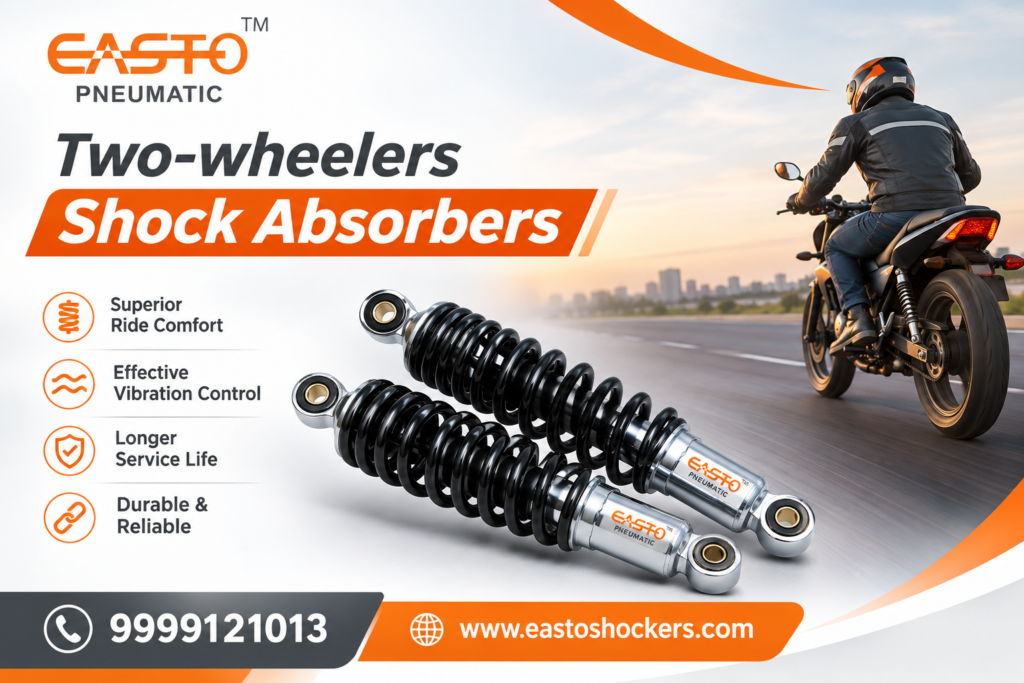
For manufacturers, producing reliable two-wheelers shock absorber products requires more than selecting good-quality materials. It involves precision engineering, proper component selection, advanced manufacturing processes, and strict quality testing at every production stage.
Following appropriate quality standards helps manufacturers deliver shock absorbers that perform consistently under different road conditions and usage requirements. Companies like Easto Pneumatic understand the importance of manufacturing quality and reliability in automotive suspension components.
Let’s explore the key quality standards and factors that manufacturers should follow when manufacturing two-wheeler shock absorbers.
1. Selection of High-Quality Raw Materials
Material selection is the foundation of a durable shock absorber. Manufacturers should use suitable grades of steel and other engineering materials that provide the required strength, flexibility, and resistance to wear.
Important considerations include:
- High-strength steel for structural components.
- Quality spring steel for suspension springs.
- Corrosion-resistant materials and protective coatings.
- Consistent material composition and mechanical properties.
Using reliable raw materials helps improve product durability and ensures consistent performance throughout the shock absorber’s service life.
2. Precision Engineering and Design Accuracy
Accurate engineering plays an important role in shock absorber manufacturing. Every component must be designed according to the vehicle’s suspension requirements, load capacity, and operating conditions.
Manufacturers should maintain proper dimensional tolerances, component alignment, and design specifications.
Incorrect dimensions or poor component fitting can affect damping performance, suspension movement, and overall vehicle stability.
Computer-aided design (CAD), precision machining, and suitable measurement equipment can help manufacturers maintain production accuracy.
3. Proper Spring Quality and Performance
The suspension spring supports vehicle weight and absorbs energy from road irregularities. Its quality directly affects riding comfort and suspension performance.
Manufacturers should pay attention to:
- Spring material strength.
- Consistent spring dimensions.
- Correct spring rate and load capacity.
- Proper heat treatment.
- Fatigue resistance and durability.
Spring testing helps ensure that the component can withstand repeated compression and expansion without premature failure.
4. Effective Damping Performance
Damping is one of the most important functions of a shock absorber. It controls spring movement and prevents excessive bouncing after encountering road irregularities.
A properly manufactured shock absorber should provide consistent damping performance under different riding conditions.
Manufacturers should check:
- Compression and rebound characteristics.
- Hydraulic fluid quality, where applicable.
- Seal performance and leakage resistance.
- Consistency of damping force.
- Smooth suspension movement.
These checks help ensure better handling, stability, and riding comfort.
5. Strict Manufacturing and Assembly Standards
Maintaining consistent manufacturing processes is essential for producing reliable two-wheeler shock absorbers.
Each component should be manufactured and assembled according to approved specifications. Manufacturers should monitor machining accuracy, welding quality, surface finishing, assembly alignment, and fastening operations.
Standard operating procedures (SOPs) and documented quality inspection processes help reduce manufacturing defects and maintain consistent product quality.
6. Durability and Fatigue Testing
Two-wheeler shock absorbers operate under continuous vibration, repeated loading, and changing road conditions. Therefore, durability testing is essential before products are approved for production or dispatch.
Common testing procedures include:
- Fatigue Testing: Evaluates the ability of components to withstand repeated loading cycles.
- Load Testing: Checks whether the shock absorber can handle specified loads.
- Leakage Testing: Identifies potential oil or hydraulic fluid leakage.
- Performance Testing: Evaluates compression and rebound damping characteristics.
- Corrosion Testing: Checks the effectiveness of protective coatings against corrosion.
Testing requirements should be selected according to the product design, applicable automotive standards, and customer specifications.
7. Corrosion Protection and Surface Finishing
Shock absorbers are exposed to moisture, dust, mud, and changing environmental conditions. Poor surface protection can lead to corrosion and reduce component life.
Manufacturers should use suitable surface treatments, protective coatings, and finishing processes to improve resistance to environmental damage.
Proper surface finishing also improves product appearance and helps maintain the quality of external components.
8. Compliance with Applicable Quality Standards
Manufacturers should follow relevant automotive quality and safety requirements applicable to their products and markets.
For example, ISO 9001 provides a quality management framework, while IATF 16949 is an automotive-specific quality management standard for eligible organizations in the automotive supply chain.
Manufacturers should also identify applicable Indian automotive regulations, technical specifications, and customer-specific requirements.
Maintaining inspection records, testing reports, and traceability documentation helps demonstrate consistent manufacturing quality.
Why Manufacturing Quality Matters for Two-Wheeler Shock Absorbers
High manufacturing standards benefit both vehicle manufacturers and end users. Reliable shock absorbers can contribute to:
- Better riding comfort on uneven roads.
- Improved vehicle stability and handling.
- Consistent suspension performance.
- Reduced premature component wear.
- Better product reliability and durability.
- Greater customer satisfaction.
Quality-focused manufacturing also helps automotive suppliers build long-term relationships with vehicle manufacturers and distributors.
Why Choose Easto Pneumatic?
Easto Pneumatic focuses on manufacturing automotive suspension components with attention to engineering, product quality, and performance requirements.
As a shock absorber manufacturer, maintaining consistent manufacturing processes, selecting suitable materials, and implementing quality checks are important considerations for delivering reliable products to the automotive industry.
Whether the requirement involves two-wheelers or other vehicle segments, manufacturing quality plays a significant role in achieving dependable suspension performance.